Skip to content
Summarize with
The most effective way to get rid of old appliances involves choosing between resale, donation, recycling, or professional appliance removal services based on the item’s condition. Functional appliances often find new life through local charities or online marketplaces. Non-functional units require careful handling to comply with environmental laws, particularly those containing refrigerants or heavy metals. Using a municipal recycling program or a specialized disposal service ensures that hazardous components are managed correctly while salvaging valuable metals.
This guide provides a clear path for clearing out space and managing heavy equipment responsibly. Proper disposal prevents environmental contamination and supports the recovery of raw materials like steel, plastic, and glass. Knowledge of local regulations and safety protocols is necessary to handle large items without injury or legal complications.
Evaluate the Condition of the Appliance
Determining the state of your equipment is the first step in the disposal process. If a washing machine or refrigerator still works efficiently, it has value as a secondhand item. Appliances less than ten years old are often eligible for resale or donation. However, if the unit requires frequent repairs or consumes excessive energy, recycling is the better choice for the environment—especially when paired with same-day junk removal services for quick and efficient disposal.
Data from the Association of Home Appliance Manufacturers indicates that modern appliances are significantly more energy-efficient than those made just a decade ago. Replacing an old refrigerator can lead to substantial savings on utility bills, making the recycling of older, less efficient units a logical financial decision.
Safe Appliance Disposal Methods
Safety is the priority when moving heavy machinery. Large items like ranges and dryers contain components that can cause injury if handled incorrectly. Furthermore, federal law mandates specific handling procedures for the cooling agents found in refrigerators and air conditioners.
Environmentally Responsible Recycling
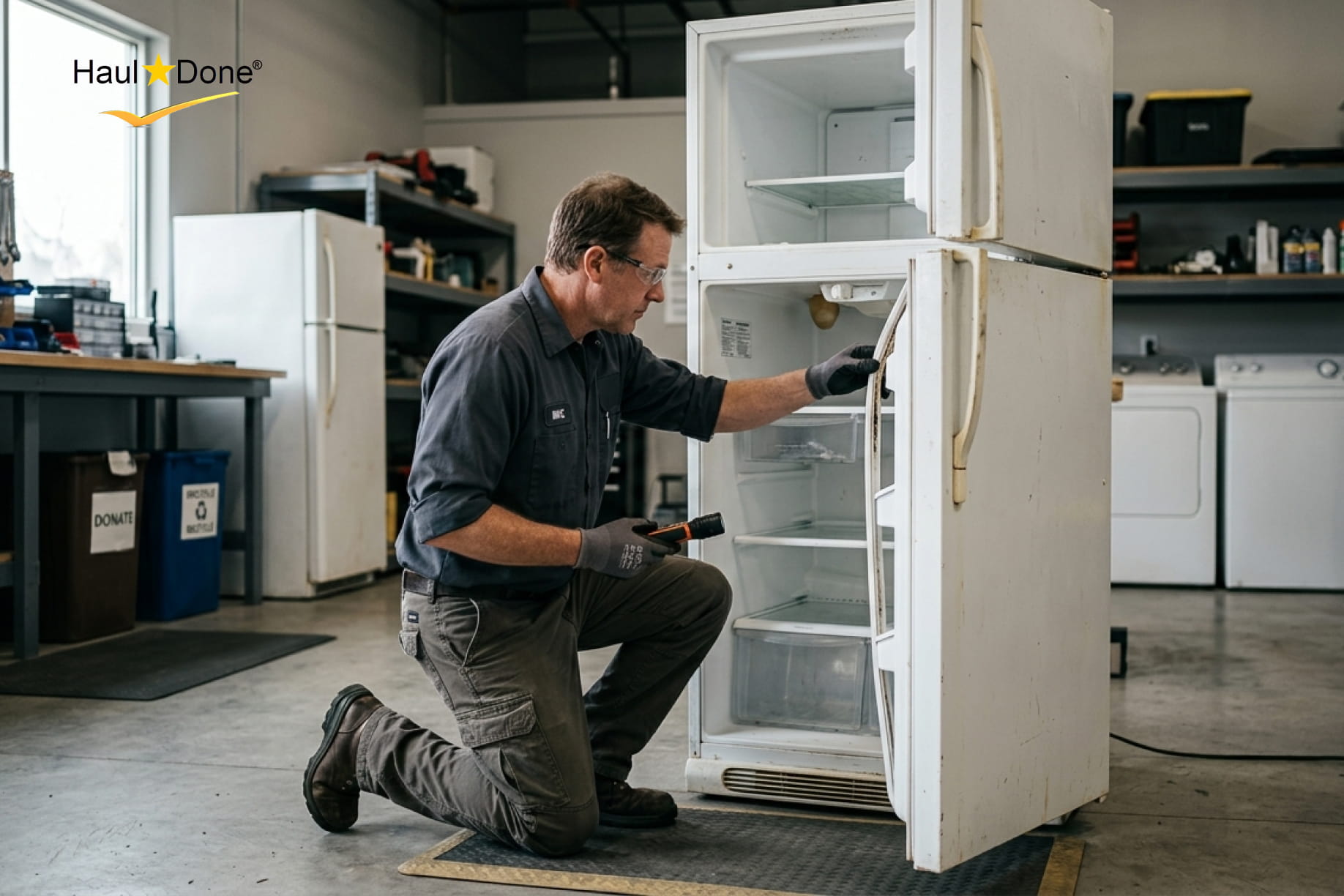
Recycling centers strip appliances down to their base materials. A report by the Environmental Protection Agency explains that the Responsible Appliance Disposal (RAD) program helps prevent the release of ozone-depleting substances. This process involves capturing refrigerants and foam blowing agents that would otherwise damage the atmosphere. Note that many scrap yards require a professional certification of refrigerant evacuation before they will accept cooling units.
Retailer Haul Away Programs
Many appliance retailers offer a “one-in, one-out” service. When a consumer purchases a new unit, the store often agrees to transport the old one for a small fee. This is a convenient option for those who do not have the equipment or assistance to transport heavy machinery themselves.
Bonus Tip: Before a retailer arrives, measure the path from the kitchen to the door. Removing doors from their hinges can prevent damage to walls and doorframes during the removal process.
Steps for Appliance Disposal
Following a structured process ensures that nothing is overlooked and the removal goes smoothly.
- Disconnect and Clean: Unplug the unit and disconnect water or gas lines. For gas appliances, it is often necessary to hire a professional to cap the line safely. Clean out any food debris or lint.
- Defrost and Drain: Refrigerators and freezers need at least 24 hours to defrost. Place towels around the base to catch melting ice. Washing machines must be drained of all residual water to prevent leaks during transport.
- Secure the Unit: Use heavy-duty tape or zip ties to secure power cords and loose parts.
- Safety First: Remove the doors from refrigerators and freezers or use a strong strap to keep them closed. This prevents children or animals from becoming trapped inside if the unit is left unattended.
- Choose the Destination: Based on the condition, decide if the item goes to a charity, a scrap metal yard, or a specialized disposal facility. If opting for a scrap yard, confirm if you need a refrigerant removal certificate.
Choosing the Best Removal Option
The table below compares the most common methods for getting rid of household equipment to help determine the best fit for specific needs.
| Method | Best For | Cost | Effort Level |
|---|---|---|---|
| Donation | Working appliances | Free (sometimes tax-deductible) | Medium (must schedule pickup) |
| Scrap Yard | Non-working metal units | Possible small payout | High (requires transport) |
| Retailer Exchange | New purchases | $25 to $100 | Low |
| Professional Service | Large volumes or heavy items | Moderate | Low |
| Municipal Pickup | Occasional large items | Free to $50 | Medium (curbside move required) |
Things to Consider Before Making a Decision
Before committing to a disposal method, several factors require attention. Local laws often dictate how certain materials must be handled.
- Local Regulations: Many municipalities ban large appliances from standard landfills. Checking with local waste management authorities prevents potential fines.
- Energy Rebates: Some utility companies offer financial incentives to get rid of old, inefficient refrigerators. Information from Energy Star shows that these programs can provide cash back for recycling older units.
- Weight and Logistics: Professional help is usually necessary for items located on upper floors or in basements. Attempting to move a 300-pound range without the right equipment can lead to permanent floor damage or personal injury.
Common Questions About Appliance Removal
Finding the right information about specific items helps streamline the process. Many homeowners wonder about the specifics of refrigerator disposal or how to handle bulky laundry units.
Most local scrap yards accept washers and dryers because they are primarily made of high-quality steel. However, they typically reject refrigerators unless the refrigerant has been professionally evacuated and the unit is tagged with a removal certification. If a homeowner cannot provide this documentation, a specialized appliance removal service or a municipal program is often the only viable choice for cooling units.
Bonus Tip: Always check if a charity offers a “no-contact” pickup. This allows the item to be left on a porch or driveway, making the process faster for both the donor and the organization.
Frequently Asked Questions
Can appliances be put in a standard dumpster?
No, most waste management companies prohibit appliances in standard trash containers. These items contain hazardous materials and bulky metal frames that require specialized processing.
Is it possible to get money for an old refrigerator?
If the unit is functional and efficient, selling it on a local marketplace is possible. For non-working units, scrap metal yards may pay a small amount based on the weight of the steel, though the cost of transporting the unit often exceeds the payout.
How are refrigerants handled during disposal?
Federal law requires that a certified technician recover refrigerants using specialized equipment. Releasing these gases into the atmosphere is illegal and carries heavy penalties. Professional disposal services ensure these chemicals are handled according to EPA standards.
What should be done with old microwaves?
Microwaves are considered electronic waste in many regions. They should be taken to an e-waste recycling center rather than a standard scrap yard to ensure the electrical components are processed safely.
Final Steps for Successful Disposal
Managing old appliances requires a balance of safety, environmental awareness, and logistical planning. Evaluating the condition of the unit determines if it should be sold, donated, or recycled. Prioritizing certified recycling programs helps protect the environment from hazardous chemicals while returning valuable metals to the manufacturing cycle.
Always verify local disposal rules and consider the physical demands of moving heavy equipment. For most situations, selecting a method that includes professional transport is the safest way to clear out old machinery.
Reliable Appliance Removal with Haul Done
When household tasks involve heavy lifting and complex disposal rules, Haul Done provides the necessary support for homeowners. The team manages the entire process from extraction to eco-friendly disposal, ensuring that every item reaches the correct facility. For assistance with large-scale removal projects, contact Haul Done at 209-968-4285.
Sources
- Association of Home Appliance Manufacturers – A leading trade association providing data on appliance life cycles and energy efficiency standards.
- Environmental Protection Agency – The official government resource for the Responsible Appliance Disposal program and refrigerant regulations.
- Energy Star – A government-backed program providing information on energy savings and utility rebate programs for appliance recycling.